Pokémon TCG's Bug Out attack grows into a sixteen-card Delta Reign shell

Pokémon TCG's Bug Out attack is moving from a one-card curiosity toward a deck shell players can actually test. Newly revealed Combee, Spinarak, and Masquerain join Sizzlipede as Pokémon carrying the attack, which raises the theoretical package from four copies to sixteen.
That number does not make Bug Out a proven competitive strategy. It does change the math enough to make deck building around the attack possible. The new cards are expected to reach English players through Delta Reign later this year, giving casual builders and families time to judge the idea before spending heavily on it.
Why sixteen copies change the plan
Wargamer's card analysis identifies the three new attackers and explains the central deck-building shift. With only Sizzlipede available, the normal four-copy limit left too few Bug Out cards to support the attack consistently. Four different Pokémon with the same attack can occupy as many as sixteen deck slots.
Bug Out rewards a deck for finding more Bug Out cards among cards revealed from the bottom of the deck. Wargamer calculates that seven successful hits can reach 350 damage. A larger package improves the odds of seeing those cards during the attack, though it also claims a large portion of a sixty-card deck.
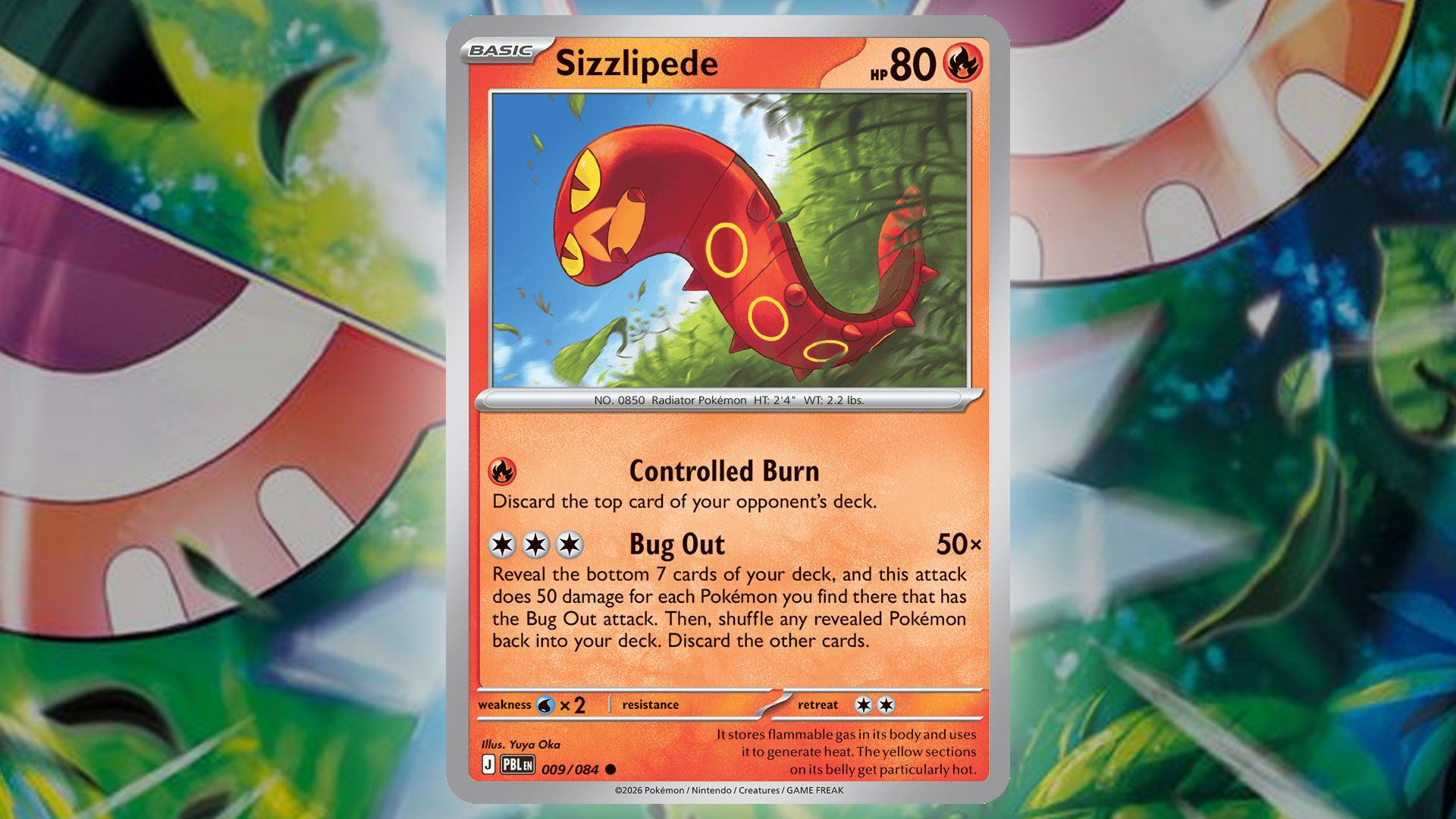
A sixteen-card package creates a real tradeoff. More matching cards can strengthen the attack's ceiling, but each slot used on a Bug Out Pokémon is unavailable for draw support, recovery, switching, Energy, or another attacker. A workable list will need enough insects to make the attack matter without crowding out the cards that let the deck function.
Masquerain may help with that pressure because Wargamer reports that it can use Bug Out for one Grass Energy. A cheap attack cost can shorten setup, especially in a casual list that wants to start testing the central idea quickly.
The attackers are still fragile
The largest warning is durability. Wargamer reports that none of the current Bug Out attackers has more than 110 HP. A deck can produce an impressive damage calculation and still struggle if its active Pokémon falls before the pieces line up.
That makes the shell experimental. Its headline number describes a ceiling under favorable conditions. It does not establish how often the deck reaches that number, how well it recovers after a knockout, or whether it can survive pressure from established decks. Those answers require real games after the cards become available.
For family play, that uncertainty can be a strength if expectations stay honest. Building a strange insect deck together can teach probability, tradeoffs, and iteration. A child can change the number of Bug Out cards, track what the attack reveals, and see how deck composition affects results. The lesson gets lost if the deck is sold as a guaranteed winner before anyone has tested it.
PokeBeach confirms the release context
PokeBeach's independent full-set report confirms that all 76 main-set cards from Storm Emeralda have been revealed. The report supplies the broader card pool containing the newly revealed Bug Out Pokémon, gives Storm Emeralda a July 31 release in Japan, and says those cards are expected in the English Delta Reign set on November 6.
The two reports contribute different parts of the story. Wargamer analyzes the Bug Out package and its possible damage. PokeBeach verifies the full set reveal and the expected path into the English release. That combination supports a deck-building preview without pretending the shell has tournament results.
How to approach the experiment
Players interested in Bug Out should begin with a paper list or proxy test inside their usual play group's rules. Start below the theoretical sixteen-card maximum and record how often the attack finds enough matching cards. Then adjust the count while watching whether the deck still has room for basic support.
Parents buying for younger players should avoid treating sealed packs as a reliable way to assemble a specific experimental package. Once the English cards are available, compare single-card prices with the cost of chasing multiple copies through boosters. The deck may be fun at the kitchen table even if its cards never become tournament staples.
Delta Reign gives Bug Out enough names to become a coherent idea. The low HP and heavy deck-space demand keep the idea grounded. Test the shell, enjoy the insect theme, and let actual games decide whether the 350-damage ceiling is a useful plan or a memorable long shot.
Continue exploring CCGs/TCGs coverage from Crosspad Gaming.