

Loftia’s Shared Work Is Worth Affirming, Not Mistaking for Virtue
Commentary: Its advertised economy gives cultivation and common benefit a welcome place, but rewards and paid cosmetics complicate any claim of selfless service.
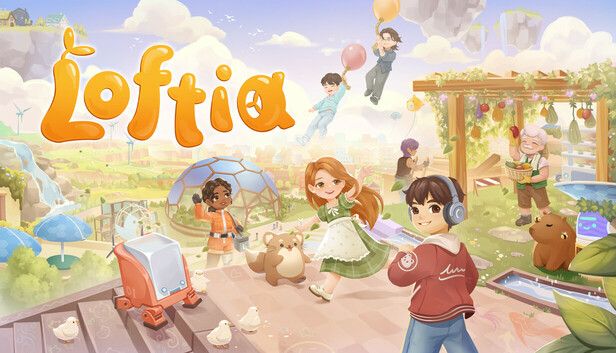
Loftia entered Early Access on November 3, 2026, with an appealing proposition: grow resources, make useful things and help build something others can enjoy. Qloud Games advertises sustainable farming, renewable-powered tool crafting and shared construction that unlocks resources, stories and islands. For Christian players, that is a fictional role worth affirming. The qualification matters just as much: worthwhile goals inside a game are not proof of selfless motives, environmental virtue or Christian righteousness.
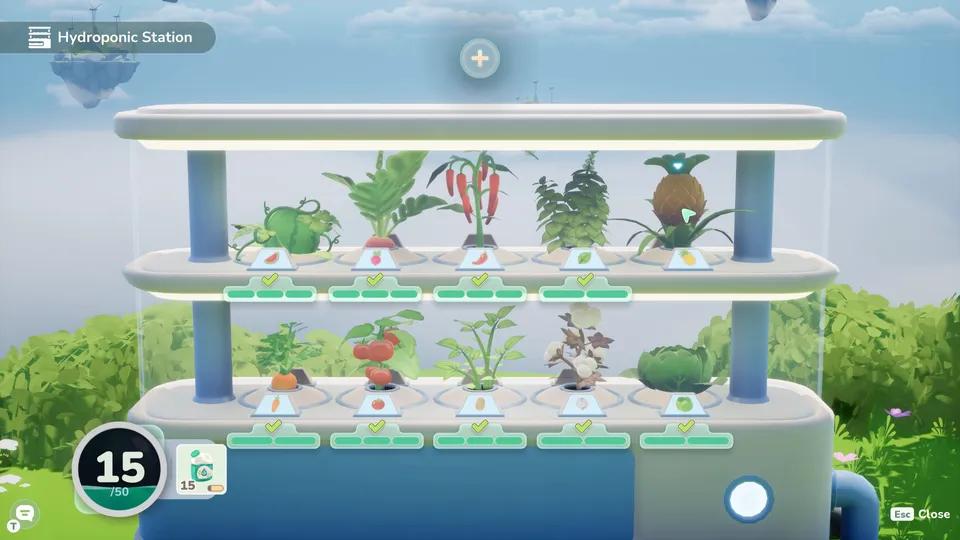
The concrete design promises are more interesting than the sustainability label alone. The store description names hydroponics, aquaponics and trellis farming, alongside tools crafted with energy from sun, wind and rain. Its Early Access description includes World Projects among available activities; the official overview advertises rebuilding the Loftia City Dome and constructing renewable energy sources as examples. These are developer descriptions, not a hands-on assessment of how the systems work or how accurately they represent resource use.
Genesis 2:15 gives Christians a reason to appreciate cultivation without needing a game to attach a moral slogan to it. Before the Fall, God places the man in Eden to cultivate and care for the garden. Work and care belong together in that account; tending what God has made is not merely a punishment or an obstacle to leisure. Loftia’s advertised pairing of growing resources and useful production offers a limited fictional resemblance to that calling. The passage does not endorse a particular farming technology, and the resemblance does not establish the simulation’s environmental accuracy.
There is a related reason to welcome the shared builds. In Ephesians 4:28, Paul instructs former thieves, within his account of new life in Christ, to replace stealing with honest labor so they have something to share with people in need. The point is not simply to become productive; it is to turn productive capacity outward. Loftia’s advertised contributions link a player’s activity to shared benefits as well as personal advancement. That is a worthwhile direction for fictional work, even though unlocking an island is not equivalent to providing for a needy neighbor.
The strongest objection is that this interpretation gives a reward system too much moral credit. Contributions unlock things for the contributor. The official overview also advertises fast-paced Community Farming with leaderboards, while an optional paid Community Pass adds cosmetic rewards from World Projects. A player can pursue progression, rank or appearance through activities presented as communal service. Calling that structure selfless would overlook much of what the developer actually describes.
That objection limits the praise, but it does not cancel it. Personal benefit and common benefit are not opposites. A design can reward the individual while still making shared construction a desirable goal. The defensible claim is about the role the game offers, not the moral character of everyone who performs it: helping to build a common resource is a worthwhile fictional objective even when it also advances your own account. Ephesians supplies a principle for valuing work directed toward others, not a test by which a game’s reward loop can certify charity.
The commercial details deserve equally precise treatment. Paid World Project cosmetics mean these projects also serve a sales structure; they are not a pure model of giving without return. Yet Qloud Games says the pass rewards will not expire and can be unlocked after a project ends, an important qualification rather than a detail to omit from criticism. The developer also says solo play will not block progression and permits access to almost all content. We should neither portray community participation as mandatory nor assume that purchasing cosmetics reveals a player’s motives.
Christian appreciation of the environmental premise also needs a boundary. The overview describes the Hanging Gardens as celebrating “mother nature.” Christians should distinguish caring for God’s creation from treating nature itself as sacred. But that phrase alone does not establish worship, religious practice or the theology of the whole story. Genesis grounds cultivation in God’s placing humanity within his creation; it gives us a positive basis for care without requiring either an accusation against Loftia or an unqualified endorsement of its language.
The more consequential boundary runs between fictional accomplishment and actual obedience. In 1 John 3:16–18, love is grounded in Christ’s self-giving and tested against a concrete situation: someone has material goods while a brother is in need. John calls for action, not merely loving words. Contributing to a digital project can be an enjoyable activity, but its progress meter cannot answer whether we are generous toward people who need our help. This is not a claim that every leisure activity must become charity. It is a reason not to use fictional service as a substitute for real responsibility.
Nor should productive play become another way to imagine that goodness is earned through enough completed tasks. Ephesians 2:8–10 places salvation by grace through faith before the good works that follow. Our judgment, then, is a measured yes to Loftia’s advertised orientation: cultivation, useful making and shared benefit are good things to give players room to enjoy. Assess its execution separately, recognize the competitive and commercial incentives, and leave claims of righteousness out of the transaction. Christians can appreciate the fictional work without confusing it with the work of loving their neighbors.
Sources
Continue exploring Video Games coverage from Crosspad Gaming.