

ArcheAge Chronicles: Human Revision Is Not the Whole AI Ethics Question
Commentary: XLGAMES’ disclosure deserves credit for recognizing artists’ work, but it does not settle questions about rights, labor or translation review.

ArcheAge Chronicles entered Early Access on November 3, 2026, according to Steam, with a production disclosure worth examining beyond a simple verdict for or against AI. XLGAMES says its artists revised every visual asset that began with AI generation. That is a meaningful assurance about human involvement, but our judgment is that it answers only part of the Christian ethical question: skilled revision deserves recognition without being mistaken for proof that the entire production process was sound.
The disclosure is specific about the affected work. It identifies icons for items without in-game 3D models, some UI images, parts of the world map, and some background decorations and character weapon models. For the latter two categories, XLGAMES says AI tools were used only in early production. The studio also says no AI-generated content is created during gameplay. These are claims about particular development uses, not a description of a game generating new material live as players encounter it.
XLGAMES says none of the AI-generated visual output was used unchanged: its art team edited, composited, retouched or remodeled the affected work before finalization. Christians should not dismiss that contribution merely because an AI tool appeared earlier in the process. At the same time, this is the developer’s account, not an independently inspected production audit. It establishes what the studio is claiming, not how substantial each artist’s revision was.
Exodus 35:30–35 offers a reason to take skilled work seriously. In its account of Bezalel and Oholiab’s tabernacle work, artistic design and craftsmanship receive positive attention. Game production is not sanctuary construction, and this passage does not rule on modern AI tools. It does, however, challenge an assessment that treats the artists’ reported work as irrelevant. The moral discussion should leave room to recognize human skill rather than reducing an entire production process to the presence of a machine-generated starting point.
But craftsmanship is not the only biblical concern. In Ephesians 4:25–28, Paul connects the Christian’s renewed life with truthfulness, the rejection of stealing, and honest labor that enables generosity. Applied here, those principles give us reasons to value a concrete disclosure and to ask whether creative work respects others. They do not establish that XLGAMES used material improperly. Nor does the assurance that artists revised an asset, by itself, establish the rights behind its starting material or the conditions under which people worked.
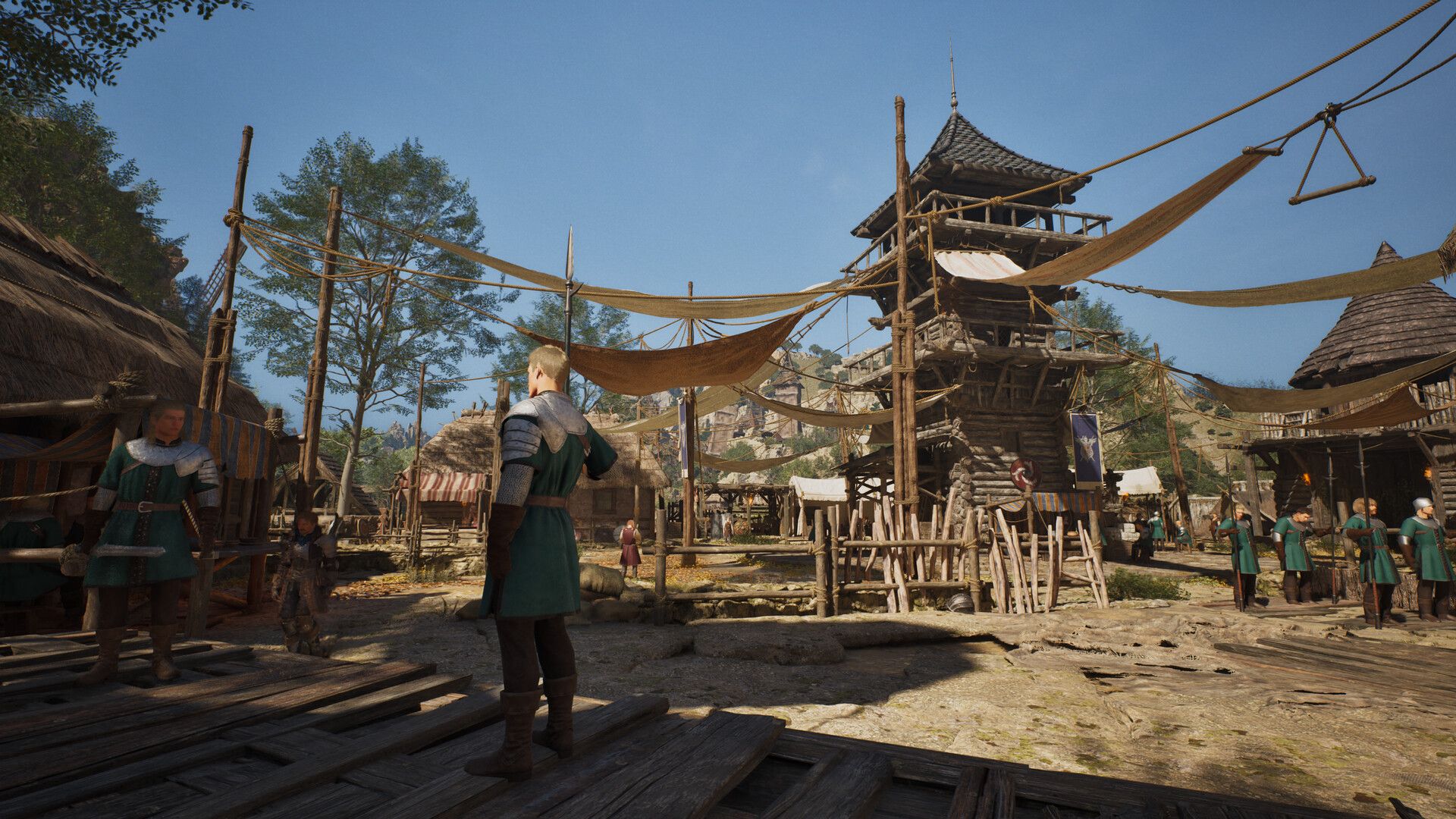
That distinction matters because editing describes a production step, not the ethical history of everything entering it. A reader concerned about source rights can reasonably ask what permissions or arrangements supported the tools and materials used. A reader concerned about labor can ask how the process affected the people doing the work. These are accountability questions, not allegations. The revision assurance does not answer them, but its limits do not supply evidence of misconduct either.
Translation needs separate attention. XLGAMES describes AI-assisted Portuguese (Brazil) and Japanese translations as provisional, without extending its visual-asset revision assurance to them. An artist’s review of a weapon model tells readers nothing about whether translated dialogue received qualified language review. For someone relying on those translations, the useful question is what review they receive and what the provisional designation means in practice. The disclosure alone supports neither a finding that the translations are inaccurate nor confidence that they have been fully checked.
The strongest alternative view is that this is already a reasonable disclosure of an ordinary tool-assisted workflow. On the studio’s account, people remained involved in finalizing every affected visual asset, the uses were identified, and generation does not happen during gameplay. It would be unfair to demand that XLGAMES prove innocence simply because it acknowledged AI assistance. Christian appreciation for craftsmanship can support taking those assurances seriously rather than assuming that AI involvement cancels the work’s creative value.
That objection is right about fairness, but it does not make revision a complete ethical answer. We can credit the disclosure without stretching it beyond what it says. Ephesians 4:31–32 directs Christians away from slander and malice toward kindness and forgiveness. Alongside Paul’s call to truthfulness, that requires discipline in both directions: do not pronounce an unverified process fully vindicated, and do not turn unanswered questions into charges against the studio or its artists.
For Christian players, the useful judgment is proportionate rather than absolute. Recognize the reported human contribution, keep visual production and translation review distinct, and seek further answers where those matters affect your purchasing decision. This record does not justify a boycott directive, but neither does it warrant blanket ethical approval. Scripture supplies principles for truthful, honest and neighbor-serving work, not a technology-specific command to buy or avoid ArcheAge Chronicles. An AI label should begin a careful inquiry, not substitute for one.
Sources
Continue exploring Video Games coverage from Crosspad Gaming.