

Silk & Silver: Prosperity Is Not a License to Buy Justice
Commentary: Crusader Kings III’s advertised merchant and republic systems invite a Christian distinction between productive trade and purchased political favoritism.
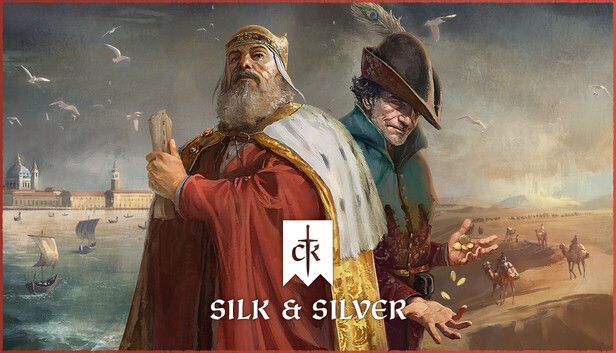
Crusader Kings III: Silk & Silver puts a pointed question alongside its promise of commercial prosperity: when does building a business become buying the rules? Steam lists November 17, 2026 as the expansion’s release date, and Paradox’s description offers both profitable trade and politically secured exclusion of competitors. For Christian players, the important distinction is not between a small fortune and a large one. It is between productive enterprise and advantage obtained by corrupting justice.
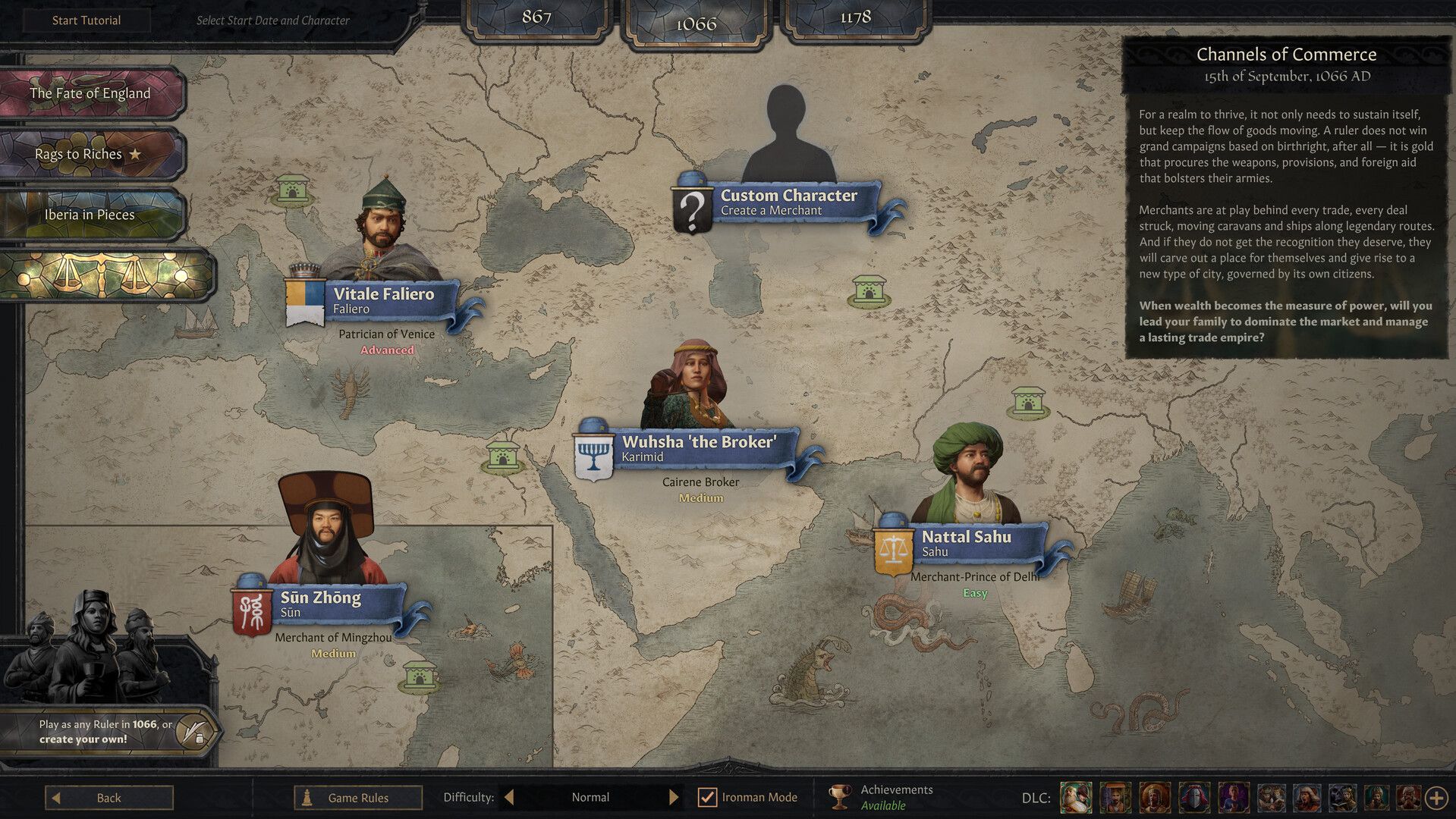
The advertised Merchant government lets players lead a landless family running a trading company, with routes covering more than 40 goods. Its three specializations offer different kinds of business: Caravaneers transport goods, Creditors lend to rulers, and Artisans make artifacts. Paradox presents profitable deals as a source of prosperity for both the family and other realms. That is a promising premise for a strategy expansion, though a store description cannot establish how well those relationships work in play.
Christian moral judgment should leave room for that positive account of work. In Ephesians 4:28, Paul’s instructions about new life in Christ replace theft with honest labor, with the purpose of having something to share with people in need. The principle is not that every profitable transaction is righteous, but that producing and providing can serve others. Transporting goods and making artifacts offer a useful fictional contrast with simply taking what belongs to someone else. Profit alone is not evidence of corruption.
Nor does Scripture make the possession of wealth the decisive charge. In 1 Timothy 6:6–10, Paul warns against the desire to become rich and the love of money. Later, in verses 17–19, he instructs wealthy believers to place their hope in God and practice generosity. Applied here, that distinction guards against two mistakes: condemning a merchant family merely for prospering, and treating its growing fortune as proof that its methods are good.
Where influence becomes injustice
Silk & Silver’s advertised political tools make those methods worth examining. Players can use money and intrigue to win patrons among nobles and royalty. The Market Lockdown feature connects political influence to exclusive rights over selected goods, and the listing also offers a complete Monopoly that pushes out competitors. Patronage is not automatically bribery, and an exclusive right cannot be judged fairly without knowing its terms. Still, the description invites a sharp question: is the family succeeding by providing something valuable, or by obtaining preferential rules that prevent others from competing?
The Republic system makes the conflict explicit by naming bribery as one way to compete against rival houses. Here Christians need not soften the moral category: bribery corrupts public judgment. Deuteronomy 16:18–20 addresses Israel’s judges and officers, commanding righteous judgment and forbidding bribes because they distort justice. Deuteronomy 1:17 likewise requires impartial treatment of small and great. These passages are not instructions for playing Crusader Kings III, but they supply a clear standard for evaluating the practice it represents. Wealth does not entitle its owner to a more favorable measure of justice.
That standard also prevents us from reducing every republican decision to corruption. Paradox lists law and the Assembly alongside bribery, says popularity determines who retains the office of doge, and describes laws governing leaders’ terms and the use of the treasury. Those are meaningfully different mechanisms. A patron relationship, a loan to a ruler, or an Assembly vote is not inherently sinful. Yet a decision’s legal form does not by itself answer whether it treats people impartially. Our concern should be purchased favoritism, not a blanket suspicion of commerce or government.
The strongest objection is that this is a historical strategy game, not advice for running a real business. Giving players corrupt options may allow them to explore compromised institutions rather than celebrate them. The advertised Republic is not even described as operating through bribery alone. Its laws, popularity and Assembly matter too. Moreover, the listing does not establish whether corrupt choices are necessary, optimal, punished or criticized by the narrative. It would be unfair to turn these advertised options into a claim that the expansion endorses corruption.
That objection is right about the limits of the evidence, but it does not erase the distinction between the represented practices. Depicting bribery is not the same as endorsing it; choosing it for a fictional family is not equivalent to bribing a real official. Neither distinction requires us to rename bribery as morally neutral. We can recognize a corrupt act within a simulation without declaring that every player who explores it approves of corruption outside the game. The biblical principle identifies what is wrong with purchased justice, not the character of an unseen player.
For Christian players, the useful judgment is therefore narrower than either an endorsement or a boycott. Welcome the possibility of a merchant strategy built around producing and moving useful goods. When considering its political systems, ask what an advantage rests on: service, fair rules, or bought partiality. The word Monopoly alone cannot settle every case, and the listing leaves its detailed consequences unknown. But where bribery purchases favorable treatment, profitability is no defense. A fictional dynasty may grow richer while its conduct becomes less just; Christians can understand the strategic gain without mistaking it for moral success.
Sources
Continue exploring Video Games coverage from Crosspad Gaming.