Dropzone Commander Third Edition: Why Transport Choices Shape the Battle
Feature: New activation Groups, revised deployment restrictions and more scenarios put army logistics at the heart of TTCombat’s far-future wargame.
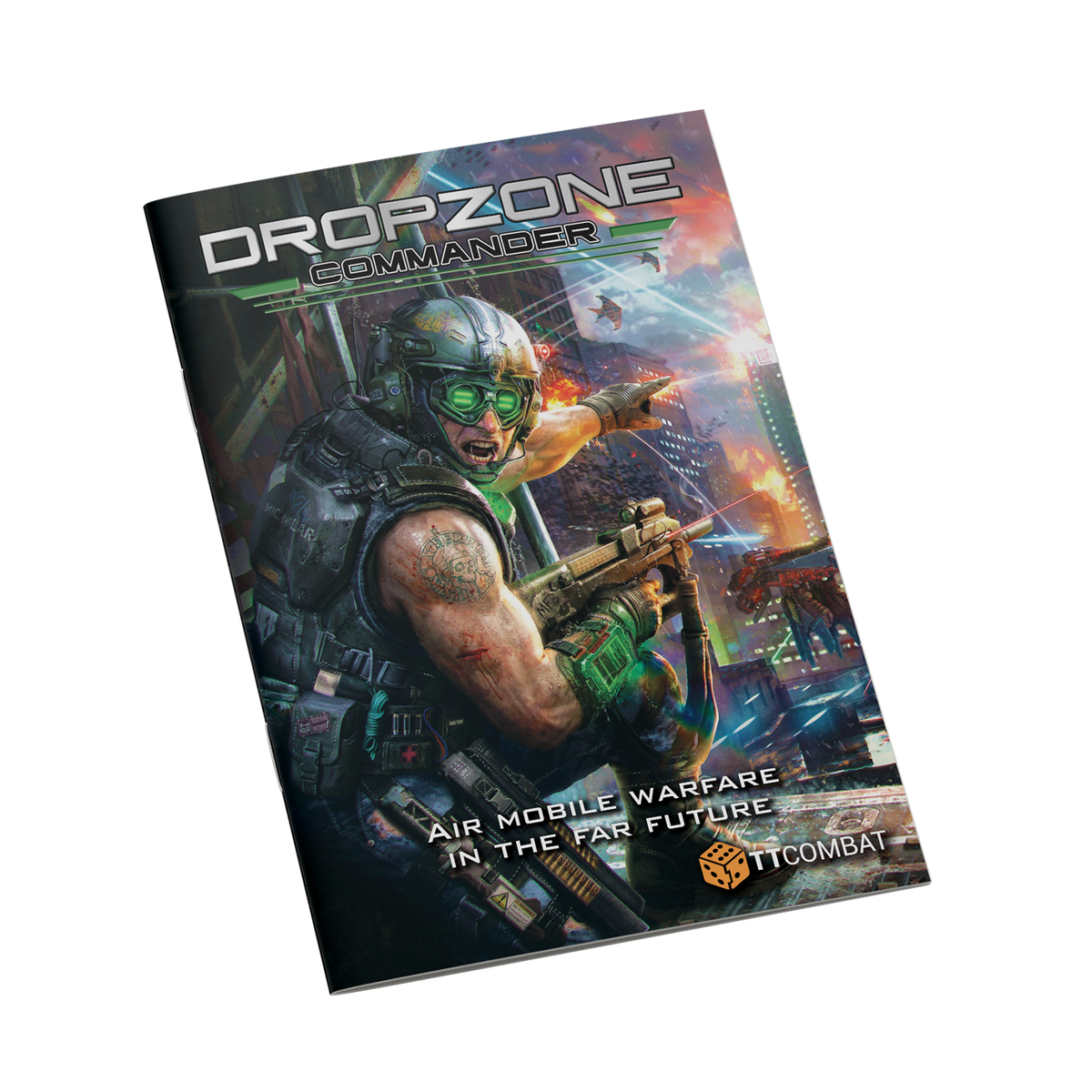
Dropzone Commander Third Edition makes the relationship between troops and their transports central to both army building and battlefield timing. TTCombat’s explanations describe a replacement for the old Battlegroup system, restrictions on attacking after disembarking, and a larger scenario selection. For returning players, those are reasons to reconsider how an army operates, not simply carry an old list into a new rulebook.
As of October 12, 2026, TTCombat lists its latest Dropzone rulebook for £10 with an Add to Cart option, describing it as a 65-page, small-format book. Its official introduction identifies the edition as Third Edition. That establishes a current retail listing, but not a verified shipping date or exact release date.
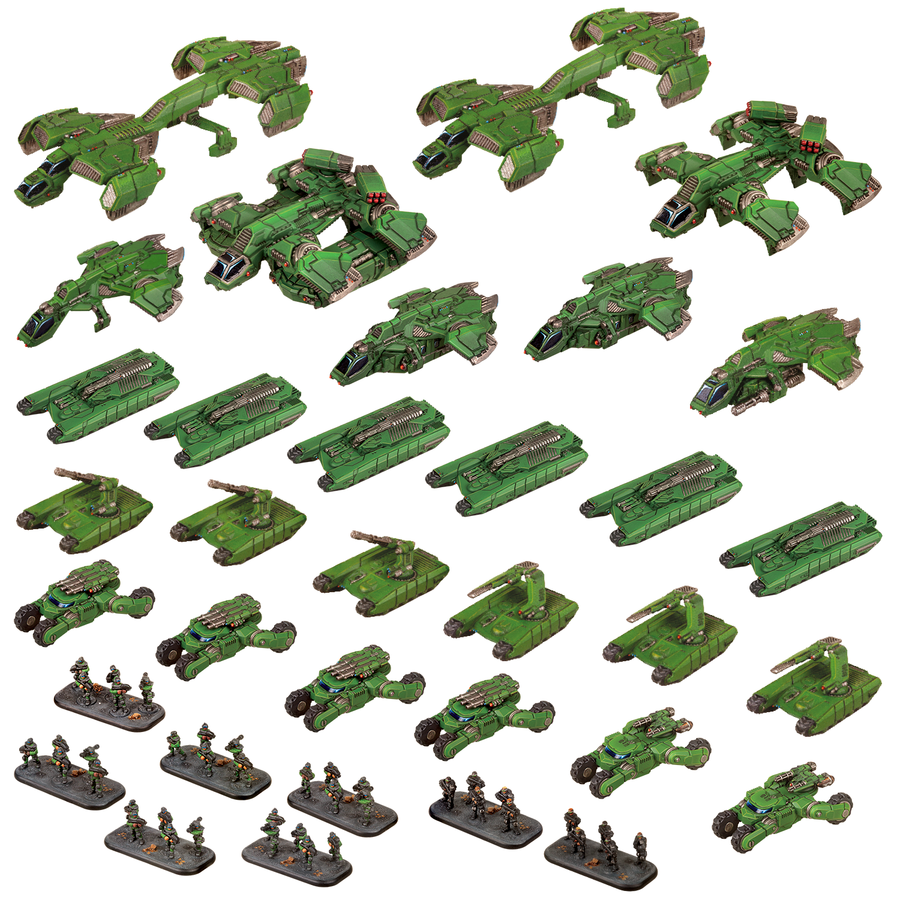
The underlying premise is far-future mass battle in which dropships rapidly move tanks, infantry and enormous war machines. Mobility is therefore more than a way to reach the fighting. In the publisher’s described rules, the transport you choose helps determine which forces activate together, while loading and unloading impose constraints on movement and attacks.
Building an army around Groups
Army composition starts with Standard units, on which players may spend as much of their overall points allowance as they wish. Spending on each of the Vanguard, Heavy and Support categories cannot exceed spending on Standard units. Those are three separate ceilings, not one combined allowance. The practical consequence is that Standard spending supports access to specialist categories rather than merely filling a minimum requirement.
Ordinary transports and commanders still cost points, but sit outside that category structure; Auxiliary Transports are an exception that counts toward categories. Returning players also need to check individual assignments. TTCombat says many units have moved between categories since their first- or second-edition positions, so an existing collection should not be treated as an automatically valid list.
Third Edition retains alternating activations, with players taking turns using portions of their armies. What changes is the organizing structure: TTCombat explicitly says Battlegroups have been replaced by Groups. A transported squad and its transport form a Group and activate together, while a larger transport can bring several squads into a single Group.
That makes carrying capacity a timing decision as well as a logistical one. A large Group can concentrate more firepower into an activation, but numerous smaller Groups offer more separate opportunities to act. The publisher presents this as a tradeoff, including the risk of larger Groups being outmaneuvered, rather than a universally superior list-building formula. It also describes Pass Tokens intended to mitigate a substantial activation-count disadvantage, although its explanation does not establish their complete operation.
The other significant adjustment is the loss of routine attacks immediately after deployment. According to TTCombat, units generally cannot attack during the round in which they disembark, with exceptions for some transports or weapons. Players therefore need to separate getting a unit into position from expecting it to deliver immediate firepower. Veterans accustomed to combining those jobs should check the relevant exceptions rather than assume their previous deployment sequence still works.
Finding an objective is only half the job
TTCombat describes nine ways to earn Victory Points, with each scenario specifying the objectives and their values. Extract is a particularly useful illustration of how the game’s parts connect: infantry enter Zones to locate hidden objects, transports carry them away, and anti-air and anti-armour forces contest the escape. A force built only to destroy targets would still need an answer to that sequence of tasks.
In the publisher’s explanation, infantry search when starting their activation in the appropriate Zone. The base search roll requires a 5+ on a D6 in small or medium Zones, or a 6+ in larger ones. Surveyor units offer a way to improve reliability: spending two Mapping Tokens allows an unmodifiable 2+ search. That is a substantial reduction in uncertainty, not an automatic discovery.
Extract awards some points for holding an object at the end of the game, but significantly more for taking it off the board. Withdrawal therefore deserves planning before the object is found. Embarking or disembarking halves movement for both the transport and its passengers, so reaching a pickup point does not mean the force can immediately leave at full speed.
Nor are transports described as a freely interchangeable taxi service. They are locked to their squads, and reassignment costs Command Points, requires a transport that has not yet activated that round, and is limited to once per round. Together, those restrictions make transport availability and activation order part of the extraction problem. Keeping a vehicle nearby is not the same as keeping a legal, usable pickup option ready.
More reasons to occupy a Zone
The clearest numerical expansion is in scenarios. TTCombat compares twelve in the Third Edition rulebook with four in Second Edition. Each of the twelve has two variants, producing the publisher’s stated total of 36 options. That gives players more prescribed setups to explore, although a count alone cannot establish how differently they play or how well they hold up over repeated games.
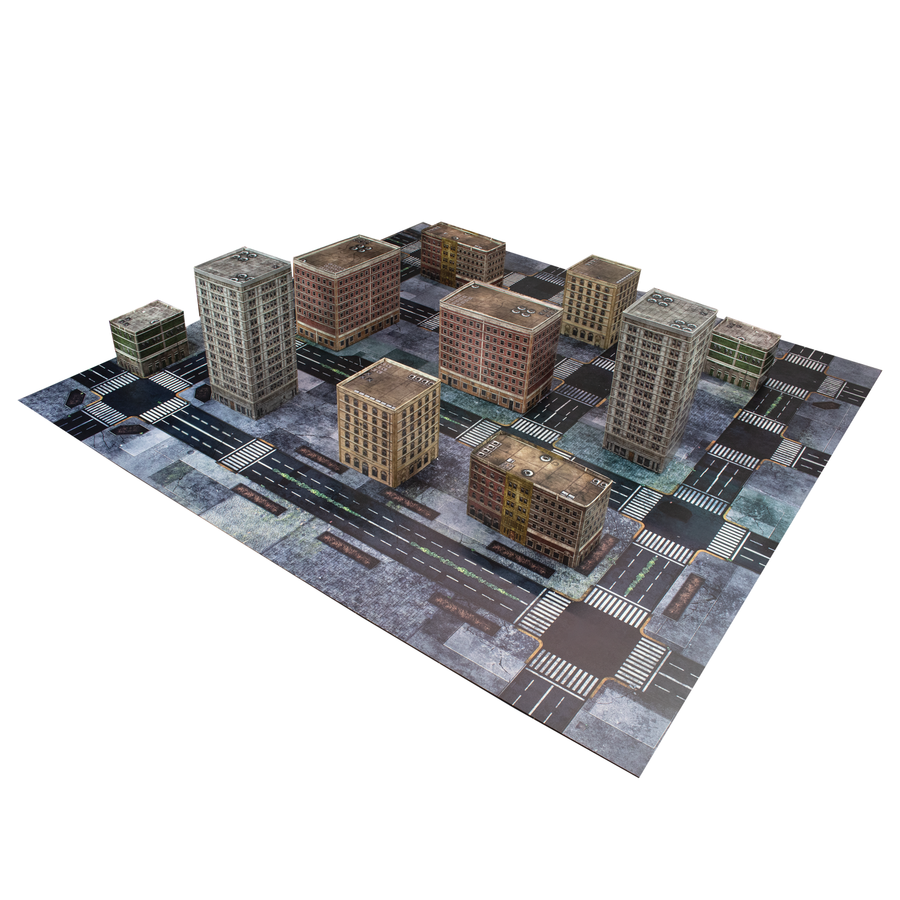
Zone Features are another expressly identified addition. These can provide controllable emplaced weapons or passive benefits, giving infantry reasons to occupy a Zone even when it contains no hidden object. Some of those advantages can be denied: the publisher says an attacker may remove a Weapon or Effect Feature in place of every five damage dealt to a Zone. Indestructible Features are separately identified as immune to removal.
For players, the important distinction is between taking ground for a scoring task and taking it for what it lets the army do next. An emplacement or passive benefit can make occupation useful beyond an object search. The option to remove certain Features also gives an attacker a choice between applying damage and stripping away a local advantage.
What to check before buying or returning
For a newcomer, the £10 rulebook listing is a concrete starting point, but it is not evidence of the cost of a complete playable collection. TTCombat announced an all-plastic two-player starter pairing the United Colonies of Mankind with Bioficers; the available announcement does not establish its current stock or final contents. Buyers should verify those details rather than treat the starter announcement as a current inventory promise.
For returning players, the useful preparation is more specific: recheck unit categories, rebuild activation plans around Groups, and review disembarkation restrictions. The publisher’s explanatory articles should be read as a guide to the design, not a substitute for checking the current rules and corrections before a game.
One content concern is concrete enough to flag for Christian households: the product’s fiction describes Bioficer flesh drones made from the slain. That is disturbing body-horror material worth considering for younger or sensitive players. The page frames those beings as a threat, however, so their presence should not be confused with endorsement of cruelty. This specific warning is not an assessment of every aspect of the game’s content.
Third Edition’s strongest practical proposition is the way transport, activation and objectives intersect. Groups make transport selection affect timing; disembarkation restrictions demand advance positioning; and Extract rewards getting a force out, not merely getting it in. For newcomers, that describes a game to investigate if coordinating different battlefield roles is the attraction. For veterans, it identifies exactly where old habits need reconsideration, without assuming that every rule has changed or that the new system is automatically better.
Sources
Continue exploring Wargames coverage from Crosspad Gaming.