

Crimson Desert Enhanced: Rebuilding Is a Better Measure of Loyalty Than Revenge
Commentary: The Greymanes’ reunion and camp offer a limited but worthwhile picture of restoration, not proof of forgiveness.

Pearl Abyss is presenting Crimson Desert Enhanced with added cutscenes and expanded story moments, but the advertised goal already gives Christians something worth considering: Kliff seeks to gather his scattered comrades and rebuild their faction. That is a more constructive measure of loyalty than simply making an enemy suffer. The promise deserves appreciation, with a firm limit: neither the premise nor the camp systems establish that this is a story about forgiveness.
The official synopsis describes a Black Bears ambush that leaves Greymanes dead or dispersed across the continent. Kliff’s determination to reunite the survivors directs attention toward those still living and what they need next. As an editorial judgment, that is the strongest moral possibility in this premise: loyalty expressed by restoring a wounded community rather than measuring devotion by retaliation.
There is concrete activity behind the rebuilding language. Method’s camp guide, credited to Geekmandem and dated April 9, 2026, reports that establishing the camp involves obtaining a tent, carrying supplies, planting stakes and raising the Greymane banner. Expansion then proceeds through quests and Comrade missions, with progress tied to Kliff’s story. These are reported mechanics from Crimson Desert, not an inspection of Enhanced’s new scenes, but they give the reunion premise a practical shape: a home requires work, not just a declaration of solidarity.
Romans 12 supplies a useful standard for appreciating that work without baptizing the faction’s cause. Within Paul’s appeal for lives shaped by God’s mercies and genuine love, Romans 12:13 directs Christians to contribute to fellow believers’ needs. The Greymanes are not the church, and a camp quest is not Christian service. The limited resemblance is nevertheless valuable: concern for others becomes tangible through provision. Shelter and supplies are a more substantial expression of belonging than a banner alone.
But rebuilding can also serve power. The Steam description explicitly connects the camp with reclaiming the Greymanes’ lost homeland of Pailune. Gathering, cooking, fishing and hunting bring benefits such as replenished stats and stronger equipment. Method describes a farm whose ingredients can be used for cooking, alchemy or sale, while rescued comrades’ requests for materials or weapons reward the player with additional inventory capacity. These systems support a reading of practical care, but they also support a less generous reading: the settlement is useful because it makes the player and faction stronger.
That is the strongest objection to finding much moral significance here. Most camp development is optional, according to Method, with few quests after its establishment belonging to the main story. A player can therefore reasonably see the camp chiefly as a progression system rather than the narrative’s moral center. It would be an overstatement to claim that sustained care for survivors defines the whole adventure, or that the rewards show the game values those survivors independently of their usefulness.
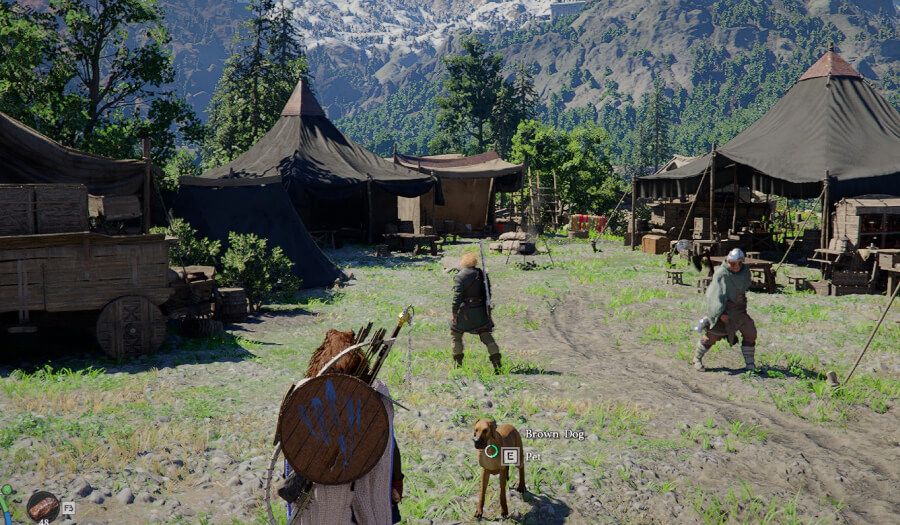
The answer is not to dismiss the rewards, but to keep the praise proportionate. A useful action can still depict something good; receiving an inventory upgrade does not erase the fictional act of supplying a comrade. Equally, the upgrade cannot establish selfless love. Christians can appreciate the picture of people helping to restore a shared home while asking a further question: would these people still deserve care if helping them did not strengthen our side? The mechanics provide an occasion for that question, not its answer.
Jesus’ account of the Samaritan in Luke 10:25–37 presses that question beyond faction loyalty. Answering a lawyer’s question about his neighbor, Jesus makes concrete mercy toward a wounded traveler the decisive action and tells the lawyer to act likewise. Our application is that loyalty to one’s own people cannot be the boundary of moral concern. Reuniting the Greymanes is an admirable advertised goal, but it does not establish how the story treats vulnerable people outside the faction. Christian neighbor-love asks more than whether our own camp prospers.
Nor should rebuilding be confused with forgiveness merely because it is not described in the language of rage. One Steam user, YeetPeet, objects that the rebuilding atmosphere insufficiently acknowledges the opening attack’s emotional consequences. That is one reader’s interpretation, not an established narrative failure or a measure of audience opinion. Still, the distinction matters: an apparent lack of anger would not by itself demonstrate a moral refusal of revenge. The inspected material does not reveal what Enhanced’s added scenes contribute to grief, reconciliation or retaliation.
Romans 12:19–21 makes the Christian requirement more demanding than emotional calm: believers must refuse personal vengeance, leave repayment to God and overcome evil with good, including care for a hungry enemy. Genuine injury does not make private revenge right. Yet the immediately following discussion in Romans 13:3–4 recognizes governing authority’s responsibility against wrongdoing. That context prevents a careless conclusion that rejecting vengeance means rejecting every exercise of justice or force. Neither a faction conflict nor the desire to reclaim a homeland, on its own, establishes that a story endorses sinful revenge.
The useful Christian judgment is therefore both positive and bounded. Appreciate the advertised effort to find survivors and the reported labor of giving them a place to live. Do not turn optional, rewarding camp systems into proof that the whole game teaches mercy, or assume new story scenes resolve questions their description leaves open. Rebuilding is a better measure of loyalty than revenge, but Christian love goes further still: it values people beyond their usefulness to our faction and refuses to make their suffering an excuse for our own wrongdoing.
Sources
Continue exploring Video Games coverage from Crosspad Gaming.