ColorSym gives board game publishers a free accessibility language

ColorSym is trying to solve a quiet but stubborn board game problem: color is often used as a rule, but not every player can read color the same way.
BoardGameWire reports that tabletop designers Chris Eastridge and Luis Francisco have launched ColorSym as a free, open-source color identification system for games. The goal is not another private icon set for one publisher. It is a shared visual language that designers can adopt without fees or permission.
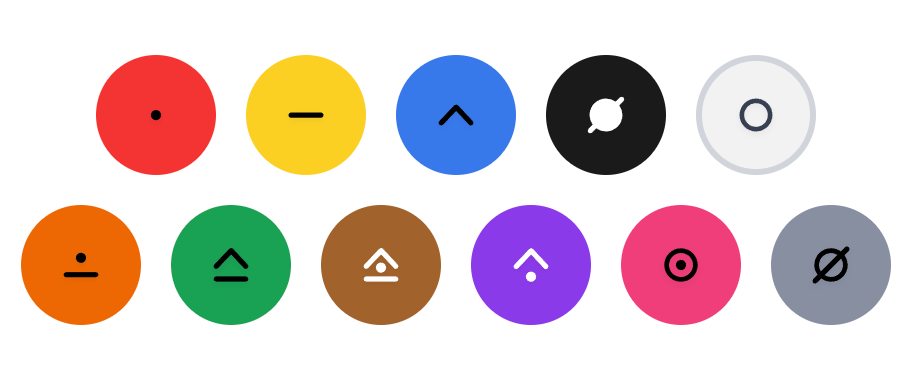
Why the system exists
Color blindness affects a real portion of the tabletop audience. BoardGameWire cites roughly one in twelve men and one in two hundred women, or about 300 million people worldwide. That matters because board games often ask players to sort, match, spend, or score by color.
Some publishers already handle this well with dual coding, patterns, symbols, or tactile clues. The gap ColorSym is trying to fill is consistency. If every game invents its own language, players have to relearn accessibility every time they open a new box.
What ColorSym offers
The system assigns a simple symbol to each color so components can communicate color information without relying on color alone. Francisco and Eastridge also designed the marks to be omnidirectional, which matters around a board game table where players may see the same token from four different sides.
The official ColorSym site hosts the live specimen and documentation. BoardGameWire also links the complete source files on GitHub. The symbols are released under a Creative Commons license, while the font uses the SIL Open Font License, making commercial adoption possible without licensing fees.
The Crosspad read
This is the kind of tool that looks small until you imagine being the player left out by a red-green resource system. Accessibility work is not just polish. It is hospitality.
For Christian families, churches, and game groups, that matters. A table should make room for the people at it. If ColorSym makes it easier for publishers to build that room into their games from the start, it is worth paying attention to.
Sources: BoardGameWire, ColorSym
Continue exploring Boardgames coverage from Crosspad Gaming.